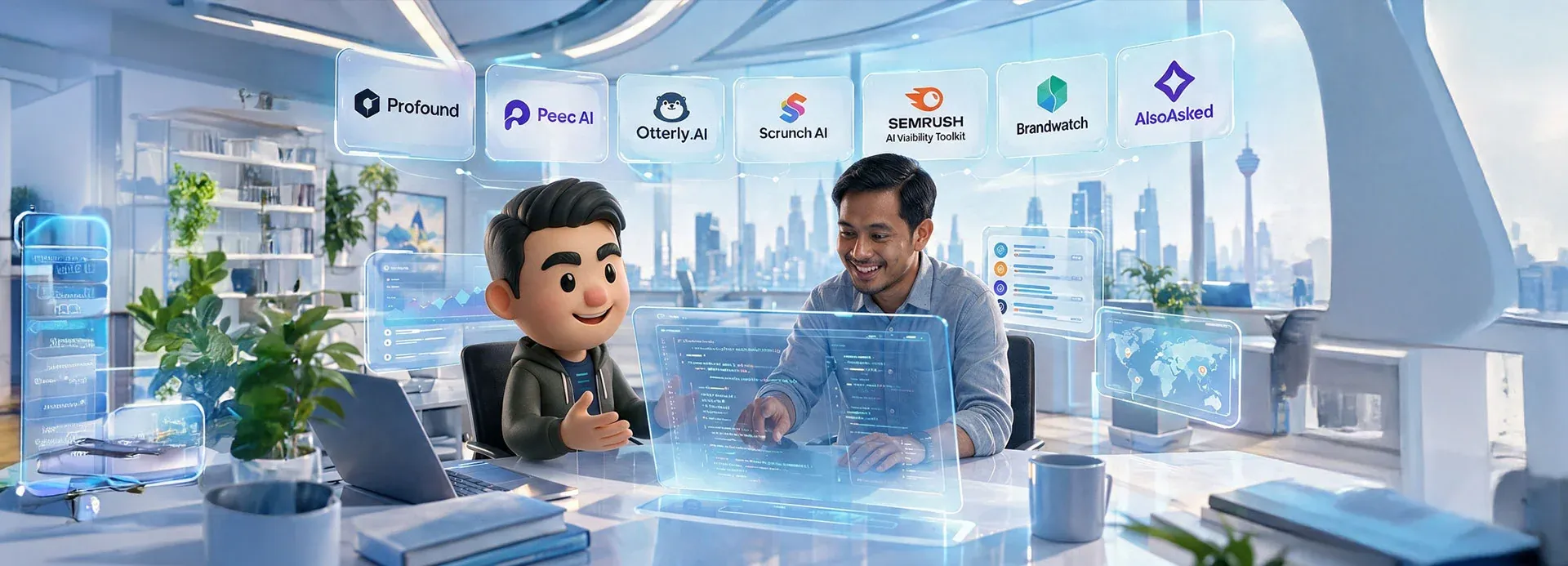



The best AI search monitoring tools worth considering for 2027 include Profound, Peec AI, Otterly.AI, Scrunch AI, and Semrush AI Visibility Toolkit. Each takes a different approach to tracking how brands appear in AI generated answers. The right choice depends on your budget, reporting needs, target markets, and the AI platforms your customers use.
Key takeaways
AI search monitoring tools measure brand mentions, citations, visibility and competitive presence across supported AI platforms.
Different tools offer different levels of prompt tracking, competitor analysis, source attribution and reporting.
Pricing matters, but reliable tracking coverage and useful recommendations are more important than collecting visibility scores alone.
People are increasingly using AI assistants to research products, compare suppliers and find answers before visiting a website. For businesses, that creates a new question: when potential customers ask AI about your industry, does your brand appear in the answer?
Traditional SEO platforms can show you keyword rankings, search traffic and backlinks. AI search monitoring tools examine a different part of discovery: whether AI systems mention your brand, cite your website or recommend competitors in response to relevant questions.
However, AI generated answers are not fixed. Results can change with the prompt, platform, location and time of testing. A monitoring tool can provide useful evidence, but no single visibility score represents everything your customers see.
For Malaysian businesses, the challenge is especially relevant when customers search in English, Bahasa Malaysia or a mixture of both.
Trinergy Digital, a software and creative technology company in Kuala Lumpur, believes businesses should evaluate AI visibility alongside their existing SEO performance, rather than treating it as an entirely separate marketing objective.
The following guide examines five platforms, their strengths, their limitations and the situations where each deserves consideration.
How did we choose the best AI search monitoring tools?
The most useful AI search monitoring tools provide consistent, relevant evidence about your brand's presence in AI answers. We prioritised practical monitoring capabilities, transparent limitations and suitability for different business sizes.
The selection uses publicly documented product features, pricing and available platform information reviewed in October 2026. It is an editorial comparison for 2027 planning, not a claim that the tools have undergone identical independent performance tests.
We considered six criteria.
AI platform coverage: Can the tool monitor ChatGPT, Google AI Overviews, Gemini, Perplexity and other relevant services?
Brand and competitor tracking: Does it show when your business appears, which competitors are mentioned and how visibility changes?
Citation analysis: Can you identify the websites and pages referenced in AI answers?
Reporting quality: Can your team review trends, export results and explain findings to stakeholders?
Geographical and language coverage: Can you track prompts relevant to Malaysia and your customers' preferred languages?
Pricing and usability: Does the subscription provide enough prompts, projects and features for the cost?
We also considered whether each platform helps users act on its findings. A dashboard that identifies missing citations is useful. A platform that connects those gaps to specific content or technical improvements may provide greater practical value.
Our shortlist focuses on established commercial products with documented AI visibility features. The recommendations are based on use cases rather than a universal ranking.
Which AI search monitoring tools are worth considering in 2027?
Five platforms deserve a place on your shortlist: Profound, Peec AI, Otterly.AI, Scrunch AI and Semrush AI Visibility Toolkit. Each serves a different type of buyer, from a small marketing team establishing its first baseline to an enterprise managing several brands.
1. Profound
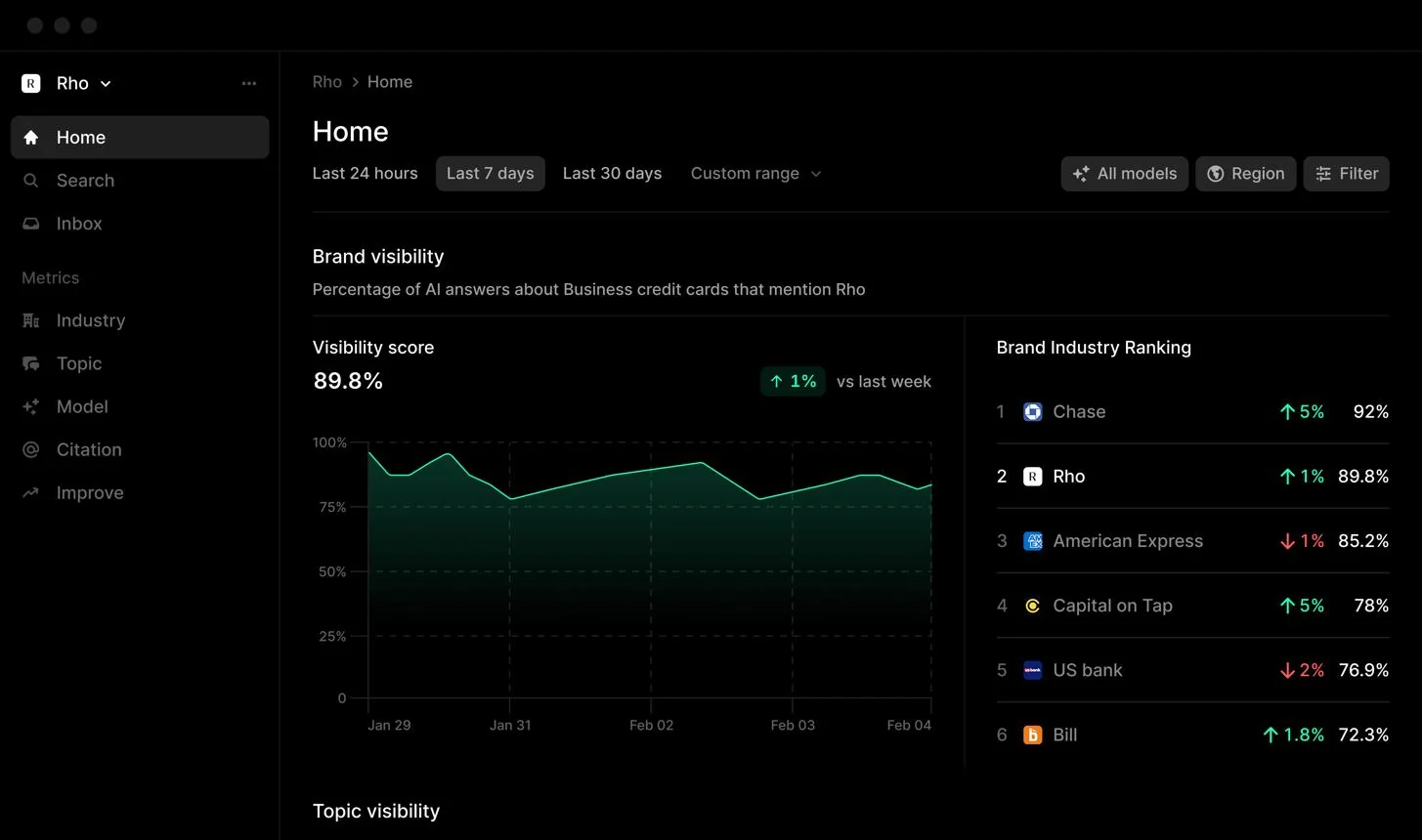
Best for: Larger marketing teams that need detailed AI visibility analysis and enterprise reporting.
Profound focuses on how brands appear across AI answer engines. Its monitoring capabilities include prompt tracking, competitor comparisons, citations and visibility reporting.
The platform also offers tools for identifying opportunities and supporting content workflows. This makes it relevant to organisations that want to connect monitoring data with marketing execution.
Profound is particularly interesting when several teams need to understand how a brand appears across different AI systems.
What stands out
Tracks brand presence and citations across supported answer engines.
Provides competitor analysis and visibility reporting.
Offers content and workflow features beyond basic monitoring.
Supports enterprise requirements through customised plans.
Pricing signal: Profound's published pricing includes a Starter plan at US$99 per month when billed annually, a Growth plan at US$399 per month when billed annually, and custom enterprise pricing. Entry level platform coverage is more limited than higher tiers.
Main drawback: Broader platform coverage and advanced capabilities require higher subscription tiers. Smaller businesses may find the full feature set more than they need.
Our assessment: Consider Profound if AI search visibility is becoming a formal marketing responsibility and your team needs detailed reporting across departments.
2. Peec AI
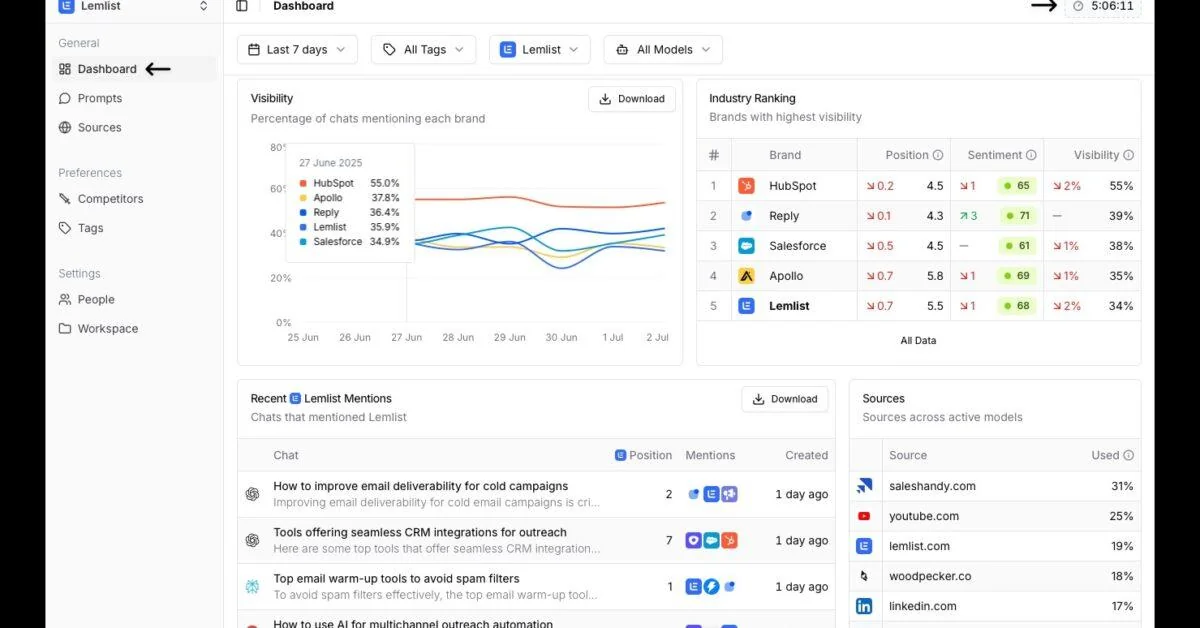
Best for: Marketing teams and agencies that want clear visibility reporting and competitor comparisons.
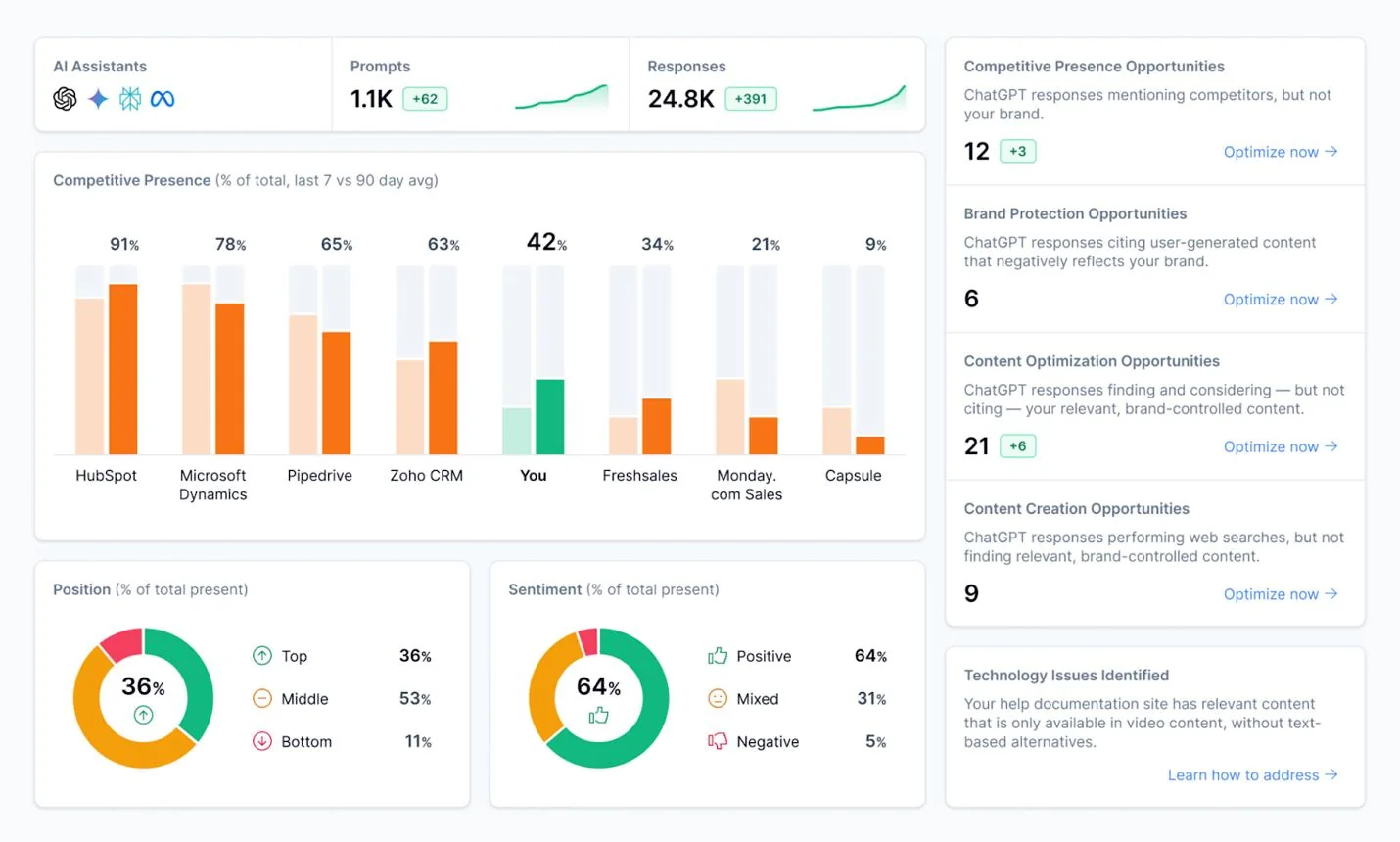
Peec AI specialises in measuring how brands appear in AI generated responses. Its analytics cover visibility, position, sentiment, citations and competitor presence.
The platform is designed around tracking prompts that represent questions potential customers might ask. Teams can then examine which brands appear and which sources AI systems reference.
Peec AI is worth considering if your main priority is understanding brand performance rather than purchasing an extensive content production system.
What stands out
Tracks brand visibility across selected AI models.
Provides competitor and citation analysis.
Supports multiple projects and team collaboration.
Offers reporting integrations on eligible plans.
Pricing signal: Peec AI's published product information identifies Starter, Pro, Advanced and Enterprise tiers. Its July 2026 pricing documentation listed US$95 per month for Starter, US$245 for Pro and US$495 for Advanced. Confirm current pricing and regional terms before subscribing.
Main drawback: The number of tracked prompts, models and projects depends on the plan. Businesses monitoring several countries or product categories may need a higher tier.
Our assessment: Peec AI is a sensible option for marketing teams that value focused reporting and need to explain AI visibility trends to clients or management.
3. Otterly.AI
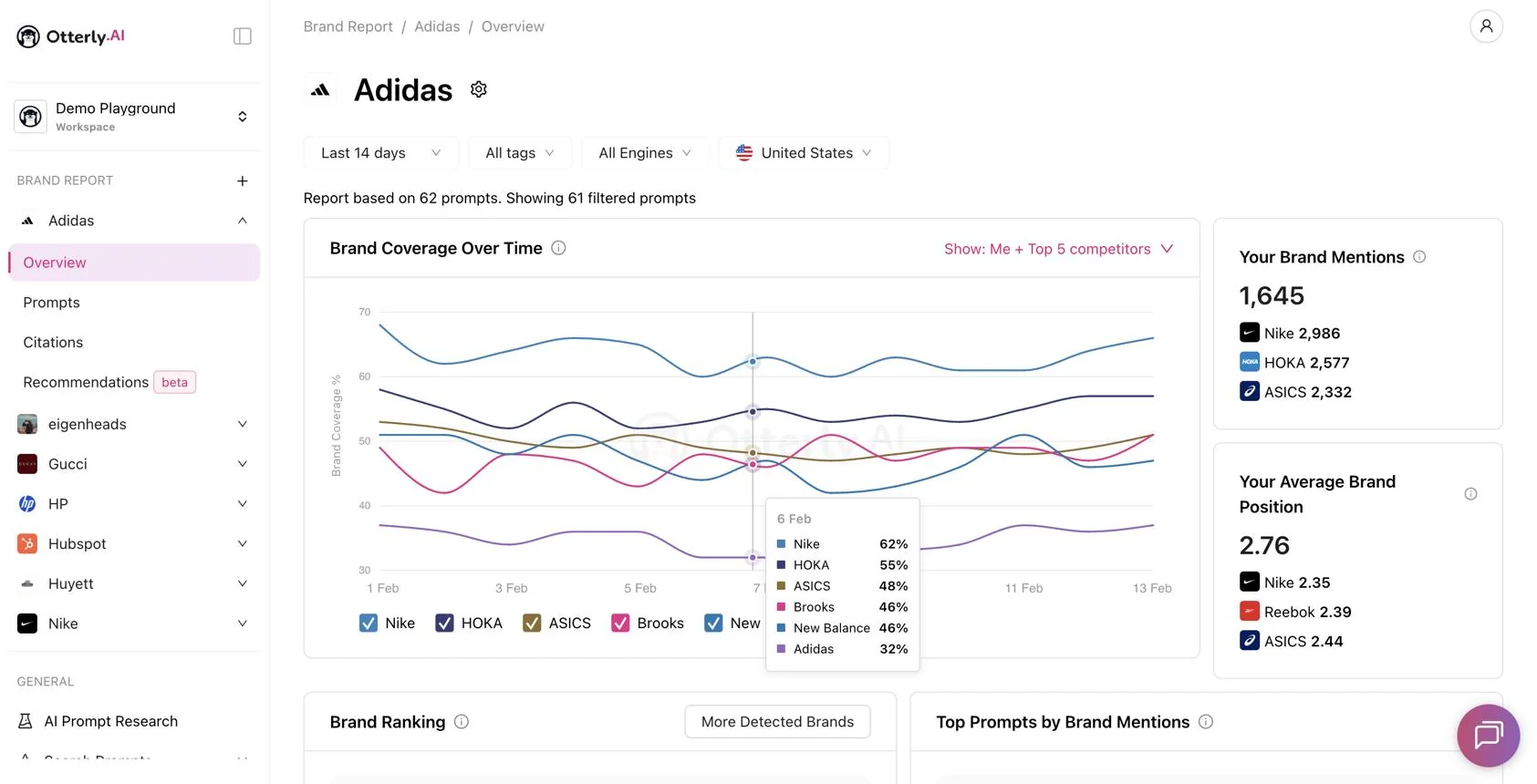
Best for: Small businesses and marketers starting with AI visibility tracking tools.
Otterly.AI provides a comparatively accessible entry point into AI search monitoring. It tracks selected prompts across supported platforms and helps users review brand mentions, citations and visibility changes.
For businesses unfamiliar with LLM monitoring tools, the smaller entry plan provides a way to test whether regular tracking produces useful information before increasing the budget.
The platform also supports more extensive reporting and integrations on higher plans.
What stands out
Offers a low-priced entry plan.
Provides daily prompt tracking.
Covers several AI search platforms.
Allows businesses to expand monitoring as their needs grow.
Pricing signal: Published monthly prices start at US$29 for Lite, US$189 for Standard and US$489 for Premium. The Lite plan includes 15 tracked prompts, while additional platforms such as Gemini and Claude are paid additions.
Main drawback: The entry plan's 15 prompt limit can become restrictive quickly. Additional AI platforms may also increase the overall cost.
Our assessment: Otterly.AI is a practical starting point for a small business that wants to test AI monitoring without immediately committing to a larger subscription.
4. Scrunch AI
Best for: Businesses that want to investigate both AI visibility and how AI systems access their websites.
Scrunch AI combines brand monitoring with website analysis. Its capabilities include prompt tracking, citation analysis, competitor monitoring and technical assessments of content accessibility.
The platform also offers an Agent Experience Platform, designed to help organisations present structured website content to AI agents.
Scrunch is worth examining when your team suspects that website architecture, content delivery or technical implementation may affect how AI systems access information.
What stands out
Combines AI visibility monitoring with website audits.
Tracks citations, brand presence and competitors.
Provides insights into AI bot activity.
Offers advanced website delivery capabilities on eligible plans.
Pricing signal: Scrunch has published several plan structures. One current pricing presentation lists Starter at US$300 per month with monthly billing, Growth at US$500 and Enterprise pricing by quotation. Buyers should confirm the applicable plan and features directly.
Main drawback: Pricing and feature availability require careful checking, particularly if your business needs advanced agent capabilities rather than monitoring alone.
Our assessment: Scrunch deserves consideration when you want to investigate technical barriers alongside brand visibility, especially for a larger website.
5. Semrush AI Visibility Toolkit
Best for: SEO teams that want to manage traditional search and AI visibility within a familiar software ecosystem.
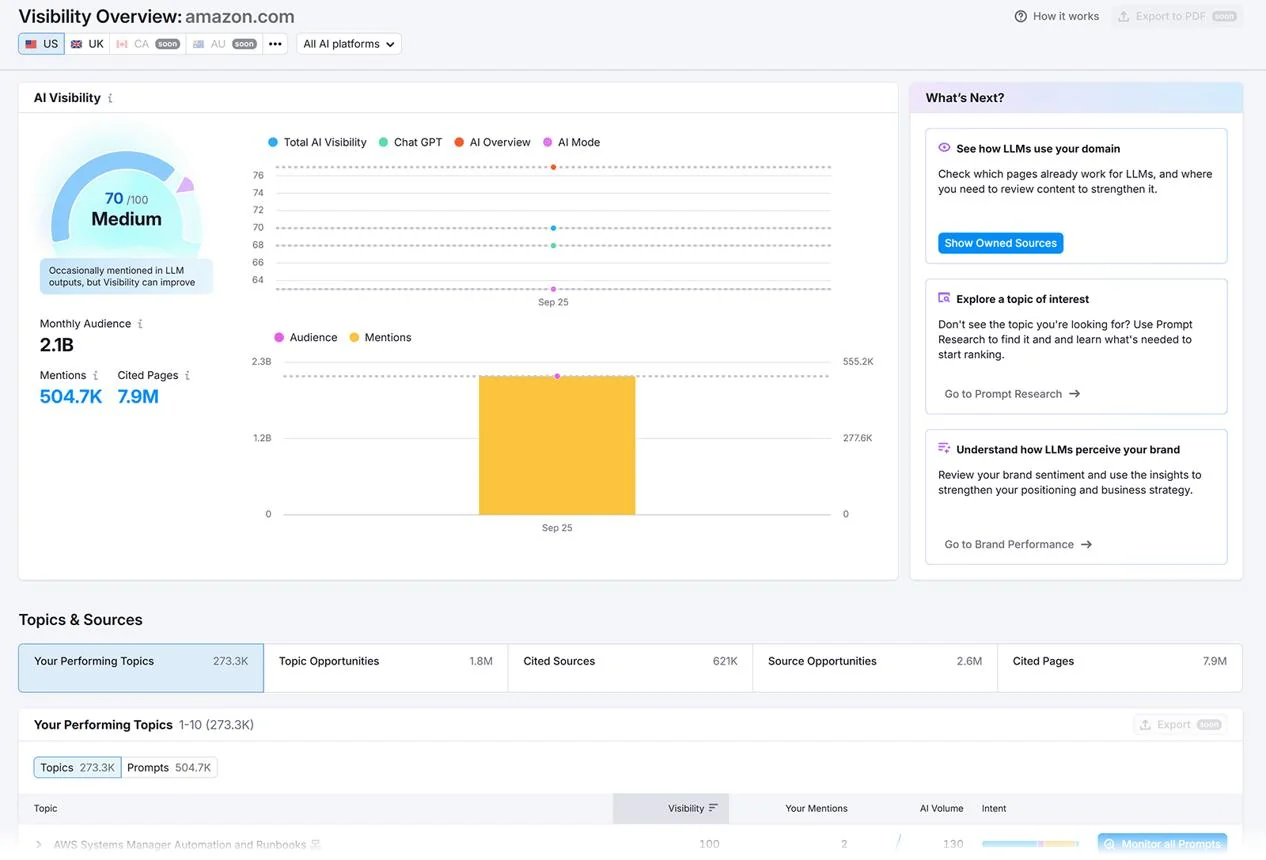
Semrush extends its search marketing capabilities into AI visibility analysis. The toolkit helps businesses investigate brand presence, competitors and AI search performance.
For teams already using Semrush, this approach may reduce the need to introduce another reporting platform.
The main benefit is the opportunity to examine conventional SEO data and AI visibility findings together. However, the two measurement systems still require separate interpretation.
What stands out
Connects AI visibility analysis with an established SEO platform.
Supports brand and competitor research.
Provides AI visibility reports and prompt monitoring features.
Offers combined SEO and AI search subscriptions.
Pricing signal: Semrush lists its AI Visibility Toolkit from US$99 per month, while its combined Semrush One offering starts at approximately US$199.95 per month. Features and allowances vary by subscription.
Main drawback: The available AI features depend on the chosen subscription. Buyers should confirm whether their required prompt monitoring and reporting functions are included.
Our assessment: Semrush is particularly relevant if your team already relies on its SEO tools and wants AI visibility data within the same working environment.
How do the leading AI search monitoring tools compare?
The five platforms differ most in their starting costs, monitoring allowances and intended users. The following table provides a practical shortlist rather than treating every platform as directly interchangeable.
Tool | Best suited for | Published pricing signal | Main drawback |
|---|---|---|---|
Profound | Enterprise and growing marketing teams | From US$99/month with annual billing | Limited entry tier coverage |
Peec AI | Marketing teams and agencies | From US$95/month in July 2026 documentation | Prompt and project allowances vary |
Otterly.AI | Small businesses and solo marketers | From US$29/month | Only 15 prompts on Lite |
Scrunch AI | Technical and enterprise teams | From US$300/month on one published monthly plan | Advanced features and plan terms need verification |
Semrush AI Visibility Toolkit | Existing SEO teams | From US$99/month | Capabilities depend on subscription |
Pricing is indicative, based on vendor information available by October 2026, in US dollars. Taxes, billing periods, regional availability and feature packages may differ. Confirm pricing before making a 2027 purchasing decision.
Price alone does not establish value. A cheaper plan with insufficient prompts may be less useful than a more expensive subscription that covers your important products, competitors and markets.
For a Malaysian business, support for relevant geographical settings and languages can matter more than the total number of AI platforms advertised.
What should you check before committing to a tool?
Before paying for an AI search monitoring subscription, test whether the platform can answer questions your business needs to resolve.
1. Check whether the tool supports your market
A Malaysian business should establish whether monitoring can represent local buying questions, rather than relying exclusively on international prompts.
For example, a Kuala Lumpur software company might track:
Which companies develop custom software in Kuala Lumpur?
What should a Malaysian SME look for in an ERP provider?
Which software development companies serve businesses in Malaysia?
Berapa kos pembangunan aplikasi mudah alih di Malaysia?
English and Bahasa Malaysia prompts may produce different responses. You should confirm whether the vendor supports the relevant language and geographical settings before purchasing.
2. Understand what the visibility score measures
AI search monitoring platforms may calculate visibility differently.
Some report the proportion of monitored answers mentioning your brand. Others incorporate position, citations, sentiment or weighted scoring.
Ask suppliers to explain the calculation and show individual responses behind the reported numbers.
A score without a clear methodology is difficult to interpret.
3. Calculate how many prompts you need
Prompt allowances are one of the most important pricing considerations.
Consider a hypothetical Malaysian software company tracking four service categories across two languages, with five customer questions per category.
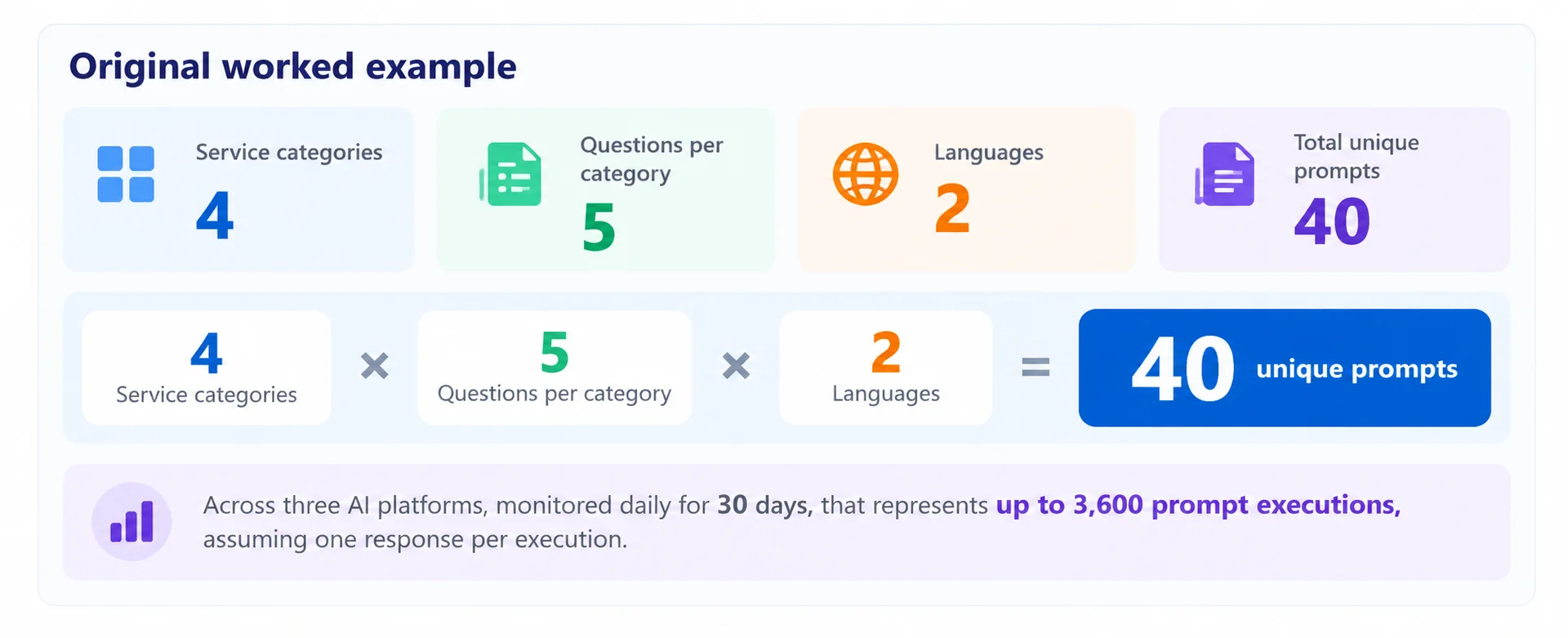
A plan allowing 15 unique prompts would not cover the full example. A 50-prompt allowance could, provided the vendor's model and regional restrictions also fit.
Importantly, vendors do not all count prompts and responses in the same way. Confirm how allowances are calculated.
4. Look beyond brand mentions
Brand tracking in AI should distinguish between being mentioned and being recommended.
An AI response might mention your company in a comparison without presenting it as a suitable supplier. Another answer might cite your website without mentioning your business name.
Both events provide useful information, but they measure different outcomes.
Review brand mentions, citations, competitor presence and the context of recommendations separately.
5. Test reporting and data access
Before signing an annual contract, ask whether the platform allows you to:
Export prompt level results and historical data.
Compare performance across defined periods.
Review the original AI responses.
Share reports with stakeholders.
Connect data to existing reporting systems.
If your team manages multiple clients, confirm project separation, access permissions and reporting allowances.
A short trial using your own prompts will reveal more than a generic demonstration.
Which AI search monitoring tool should you choose?
The right choice depends on your business size, existing software and what you intend to do with the results.
For a small Malaysian business testing AI search monitoring for the first time, Otterly.AI offers a relatively affordable entry point. Its limited starting allowance makes it better suited to a focused set of customer questions.
For an agency or marketing team that regularly reports on brand performance, Peec AI deserves consideration because of its emphasis on competitor comparisons and visibility reporting.
Profound may suit larger organisations that need more extensive analytics and structured marketing workflows. Scrunch AI is worth evaluating when website accessibility and technical analysis are priorities.
If you already use Semrush for SEO, its AI Visibility Toolkit could be a practical first option.
Our recommendation is to shortlist two platforms and test both against the same prompts for at least 14 days. Compare the usefulness of their findings, not simply the number of features advertised.
Making AI search monitoring useful for your business
AI search monitoring is most valuable when it informs better content, website and marketing decisions. Tracking brand visibility without reviewing the reasons behind your results can leave you paying for reports without a clear plan of action.
Google's published guidance on AI features confirms that established SEO best practices remain relevant to appearing in AI Overviews and AI Mode. Businesses should therefore continue improving useful content, technical accessibility and website quality alongside AI visibility measurement.
Trinergy Digital, a software and creative technology company in Kuala Lumpur, recommends treating AI monitoring as one part of a broader digital strategy. Your website must still communicate your services clearly, answer customer questions and provide an effective experience when visitors arrive.
Explore Trinergy Digital's services to see how digital strategy, website development and technology planning can support your business objectives.
If you want to assess your website's readiness for AI driven discovery or discuss your broader digital requirements, contact Trinergy Digital to start a conversation.