



Introduction to Software Testing
In today's fast evolving digital landscape, software testing plays a crucial role in ensuring applications are reliable, secure, and user friendly. From mobile apps to enterprise software systems, the success of a software product largely depends on its performance under real world conditions. Software testing in software engineering is not just a step in development; it is a continuous process that ensures quality, functionality, and security before users interact with an application.
Software testing types cover a wide range of approaches and methodologies, each designed to identify potential issues early and maintain high standards of quality. By understanding the different types of software testing, development teams can create secure applications, optimise app performance, and improve scalability for future growth.
Importance of Software Testing in Software Development
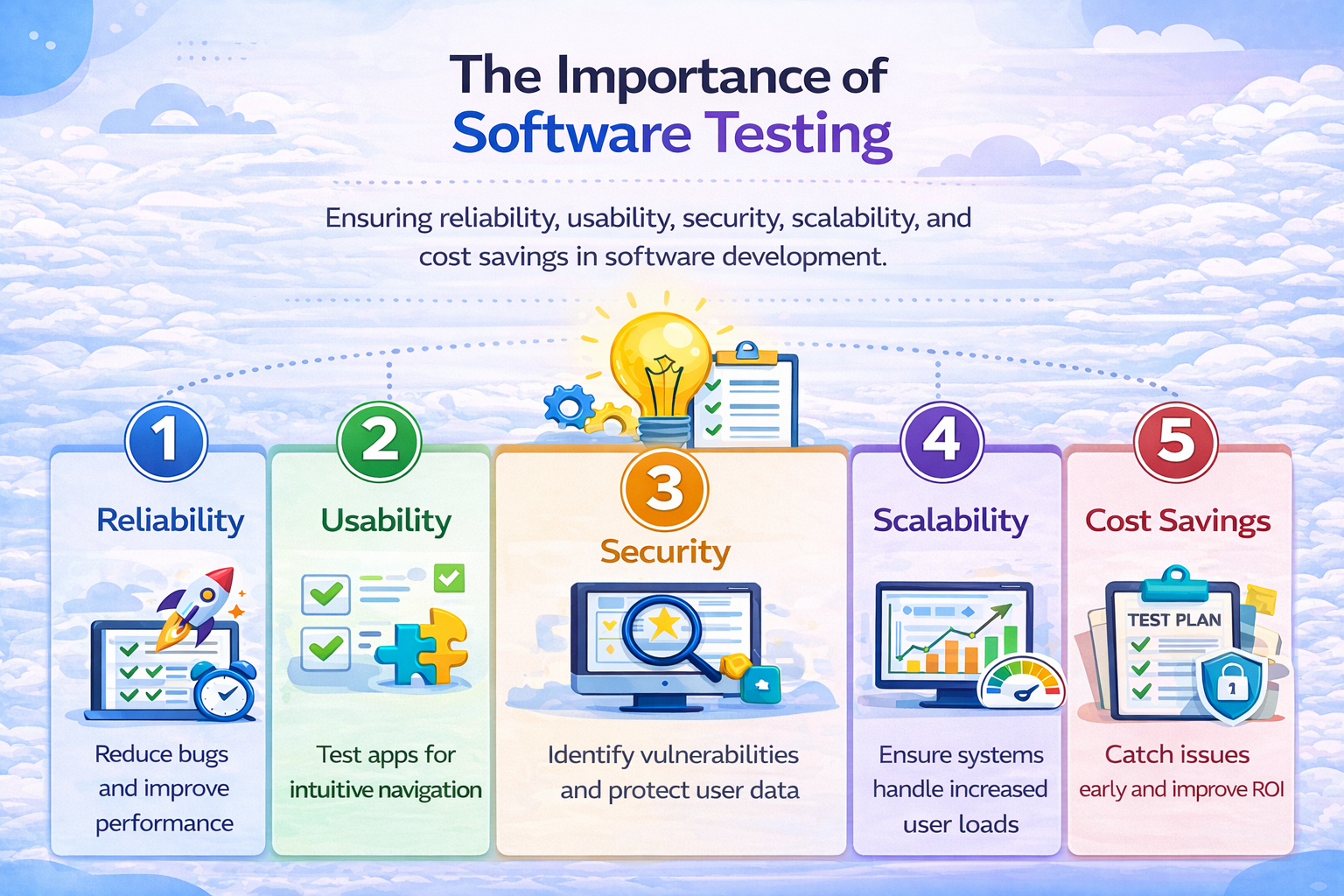
Software testing is integral to software development, offering multiple benefits that enhance product reliability and user experience. Quality assurance testing ensures that applications meet functional requirements and operate smoothly across different devices and environments. Without systematic testing, software is more likely to encounter bugs, performance issues, and security vulnerabilities that could compromise user trust.
Application usability testing is particularly important for mobile apps and web applications, as users expect intuitive navigation and consistent performance. Mobile performance monitoring helps detect issues related to load times, responsiveness, and memory usage, providing insights to improve overall app performance. By addressing these concerns early, software teams can reduce costly post launch fixes and deliver applications that satisfy users.
Additionally, software security is a critical focus in modern development practices. Vulnerability mitigation through rigorous testing helps prevent data breaches, protect user information, and ensure compliance with industry standards. Organisations that prioritise secure applications reduce risks associated with cyber-attacks, enhancing both reputation and operational stability.
Scalability is another area directly impacted by software testing. As applications grow in user base or functionality, testing types in software development help evaluate whether systems can handle increased loads without compromising performance. Stress testing, load testing, and performance testing are key approaches to ensure software can scale effectively.
Types of Software Testing
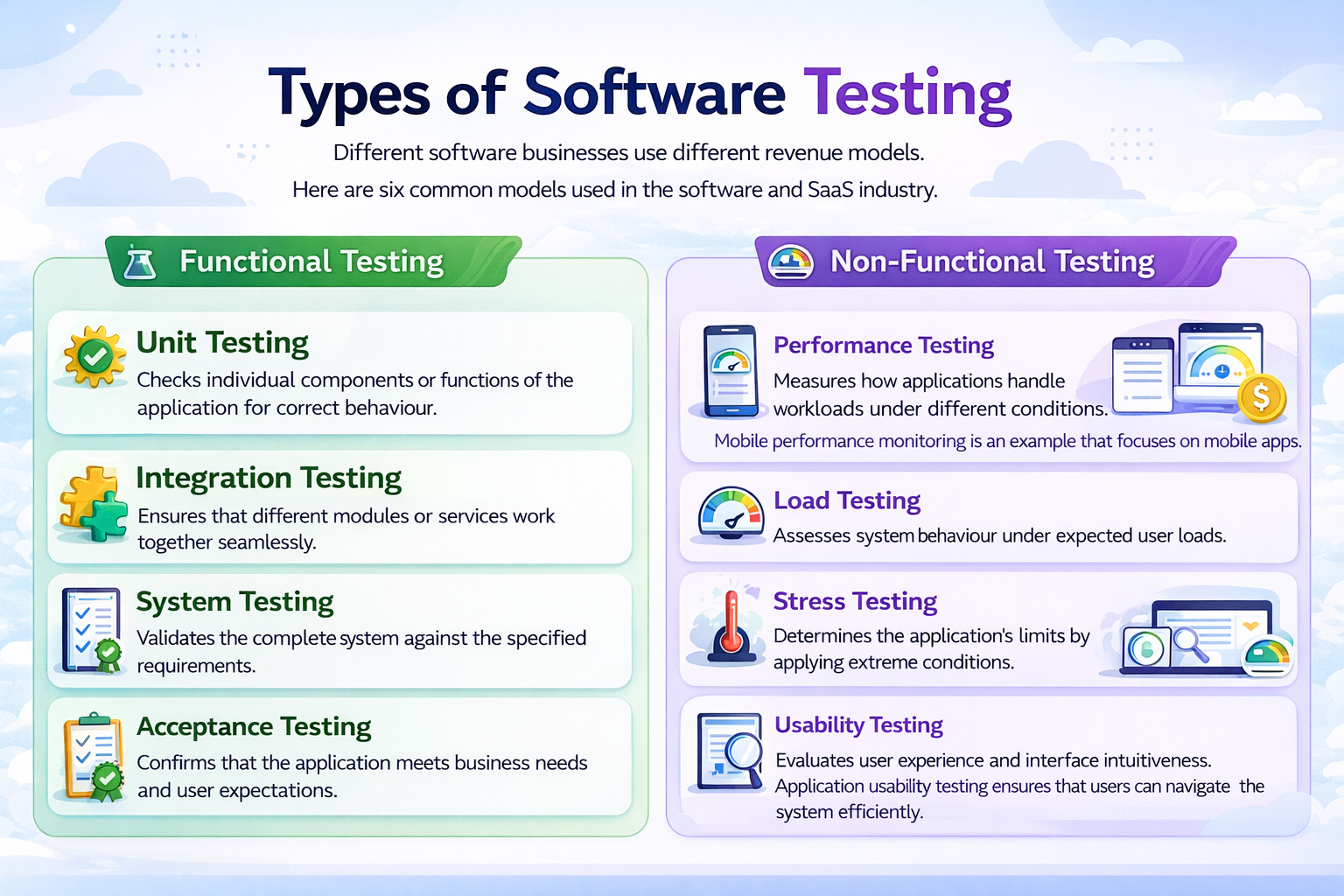
Understanding the different types of testing is essential for building high quality software. Testing types in software testing can be broadly divided into functional and non-functional testing. Each type serves a specific purpose in the development lifecycle.
Functional Testing
Functional testing focuses on verifying that the software behaves according to defined requirements. This includes testing individual features, user workflows, and integration between different modules. Common functional testing types include:
Unit Testing: Checks individual components or functions of the application for correct behaviour.
Integration Testing: Ensures that different modules or services work together seamlessly.
System Testing: Validates the complete system against the specified requirements.
Acceptance Testing: Confirms that the application meets business needs and user expectations.
Functional testing is vital for quality assurance testing, ensuring that every feature of the software works as intended and users can interact with the application without errors.
Non-Functional Testing
Non-functional testing evaluates aspects of software that are not related to specific behaviours or functions. This includes testing for performance, security, usability, and scalability. Key non-functional testing types include:
Performance Testing: Measures how applications handle workloads under different conditions. Mobile performance monitoring is an example that focuses on mobile apps.
Load Testing: Assesses system behaviour under expected user loads.
Stress Testing: Determines the application's limits by applying extreme conditions.
Usability Testing: Evaluates user experience and interface intuitiveness. Application usability testing ensures that users can navigate the system efficiently.
Security Testing: Identifies vulnerabilities and tests secure applications against potential threats, contributing to effective vulnerability mitigation.
Non-functional testing complements functional testing by ensuring software is not only operational but also reliable, efficient, and secure.
Best Practices for Effective Software Testing
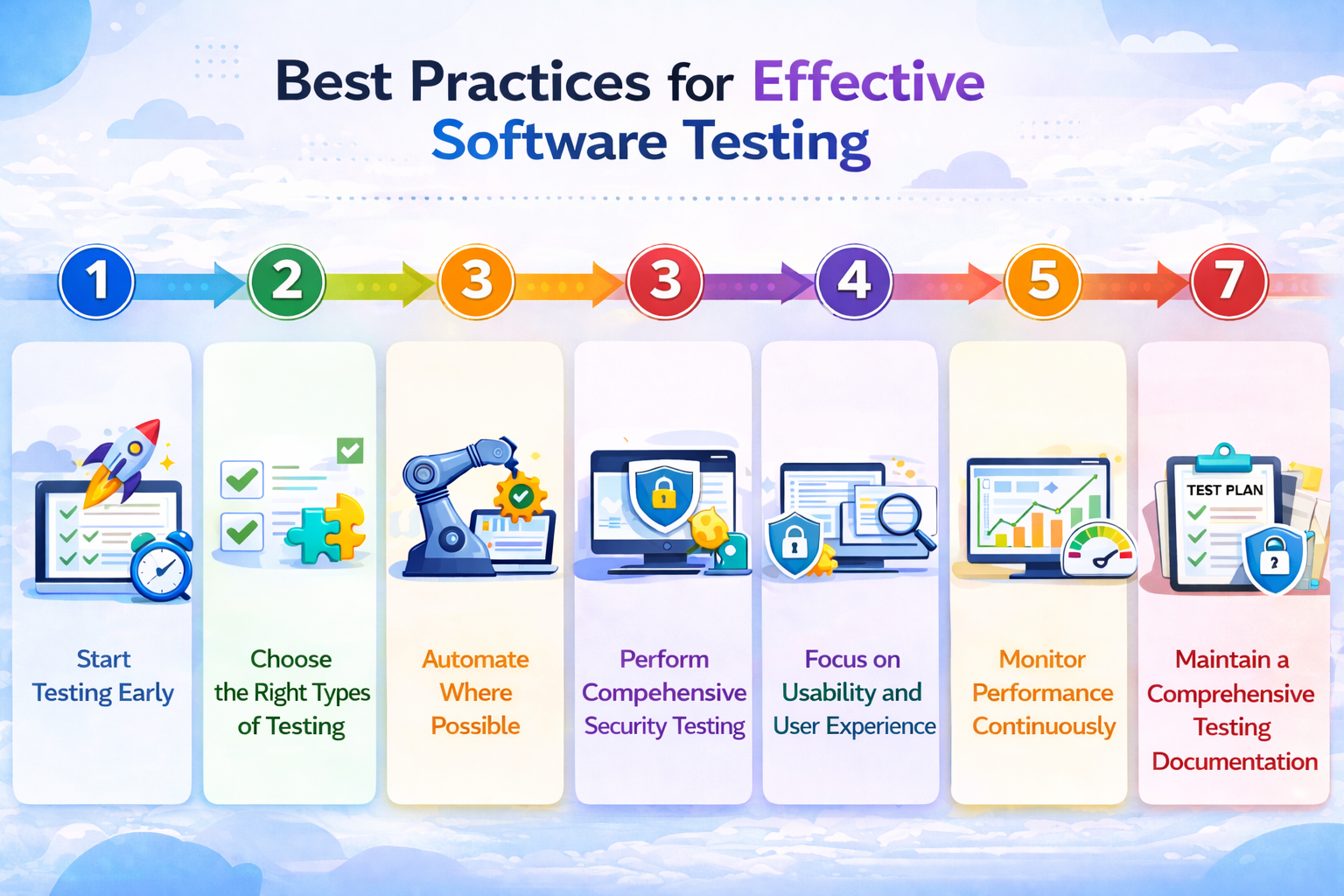
Implementing software testing effectively requires a structured approach that integrates testing into the software development lifecycle. Following best practices ensures higher quality applications, better app performance, and secure applications capable of handling growth and user demand.
1. Start Testing Early
One of the most important principles in software development is to begin testing as early as possible. By integrating testing types in software development during the design and coding phases, teams can identify defects before they escalate. Unit testing and code reviews are examples of early testing practices that catch issues before they affect the entire system.
Early testing not only reduces the cost of fixing bugs later but also supports continuous integration, allowing developers to maintain stable builds throughout development. This proactive approach is essential for mobile apps where mobile app performance and responsiveness are critical.
2. Choose the Right Types of Testing
Selecting the appropriate testing types in software is vital to ensure comprehensive coverage. Depending on the application, teams may need a mix of functional and non-functional testing, including usability testing, performance testing, and security testing.
For example, mobile performance monitoring is critical for apps expected to support heavy traffic or multiple devices. Application usability testing ensures that users can navigate features without friction, improving engagement and retention. Meanwhile, security testing is key for secure applications, protecting sensitive user data and mitigating vulnerabilities.
3. Automate Where Possible
Automation is a cornerstone of modern software testing, especially for repetitive tasks like regression testing, performance testing, and load testing. Automated testing improves efficiency, reduces human error, and allows continuous testing as new features are added.
Testing types in software testing that are commonly automated include:
Regression testing
Unit testing
Performance testing
Security scanning
Automation tools can monitor mobile app performance, evaluate scalability under load, and identify potential bottlenecks before users are impacted.
4. Perform Comprehensive Security Testing
Software security cannot be overlooked. Vulnerability mitigation should be integrated into every stage of development. Security testing types in software development include penetration testing, vulnerability scanning, and risk assessments.
Secure applications not only protect user data but also comply with regulatory standards and build customer trust. Regular testing for security vulnerabilities ensures that software remains resilient against emerging threats, a crucial aspect for applications handling sensitive information or financial transactions.
5. Focus on Usability and User Experience
Usability testing ensures that applications meet user expectations and are easy to navigate. Application usability testing involves observing users interacting with the software, identifying pain points, and refining interfaces for a smoother experience.
This is particularly important for mobile apps where mobile performance monitoring can highlight issues like slow load times, crashes, or inefficient navigation. By addressing usability concerns, developers can deliver applications that meet user needs while maintaining high engagement and satisfaction.
6. Monitor Performance Continuously
Performance monitoring should not end after the application is launched. Continuous monitoring of app performance helps identify latency issues, crashes, and resource inefficiencies in real time. Tools for mobile performance monitoring can track metrics such as memory usage, CPU load, and response times, providing actionable insights for ongoing optimisation.
Regular performance testing ensures applications scale effectively. Scalability testing simulates growing user demand and evaluates whether the system can maintain stability, reliability, and speed under increasing load.
7. Maintain a Comprehensive Testing Documentation
Documenting all software testing types, results, and corrective actions provides transparency and supports continuous improvement. Testing documentation also helps in tracking trends, identifying recurring issues, and refining processes for future projects.
Clear documentation ensures that teams can reproduce tests, verify fixes, and maintain consistent standards across multiple software releases.
Modern Tools and Strategies
Leveraging modern tools enhances software testing efficiency and effectiveness. Popular tools for software testing in software engineering include Selenium for automated functional testing, JMeter for performance testing, and OWASP ZAP for security testing.
Cloud based testing platforms allow testing across multiple devices and environments, providing insights into mobile app performance and application usability testing at scale. By combining automated and manual testing approaches, teams can achieve comprehensive coverage and ensure that secure applications perform reliably under diverse conditions.
Looking Ahead
Software testing in software development continues to evolve with emerging technologies. AI powered testing, predictive analytics, and advanced monitoring tools are enabling teams to detect issues faster, predict performance bottlenecks, and deliver more reliable, secure, and scalable software.
By implementing structured best practices, leveraging modern tools, and focusing on both functionality and non-functional qualities like security, usability, and scalability, organisations can deliver applications that not only meet but exceed user expectations.
Delivering Quality Software with Confidence
Effective software testing ensures your applications are reliable, secure, and user friendly. By understanding the different types of testing, implementing best practices, and leveraging modern tools, you can optimise app performance, strengthen software security, and build scalable solutions. Prioritising quality assurance testing and usability testing supports user satisfaction, reduces post release issues, and positions your software for long term success.
For expert guidance in implementing effective software testing, optimising mobile performance, and building secure scalable applications, contact Trinergy Digital today.