

Introduction
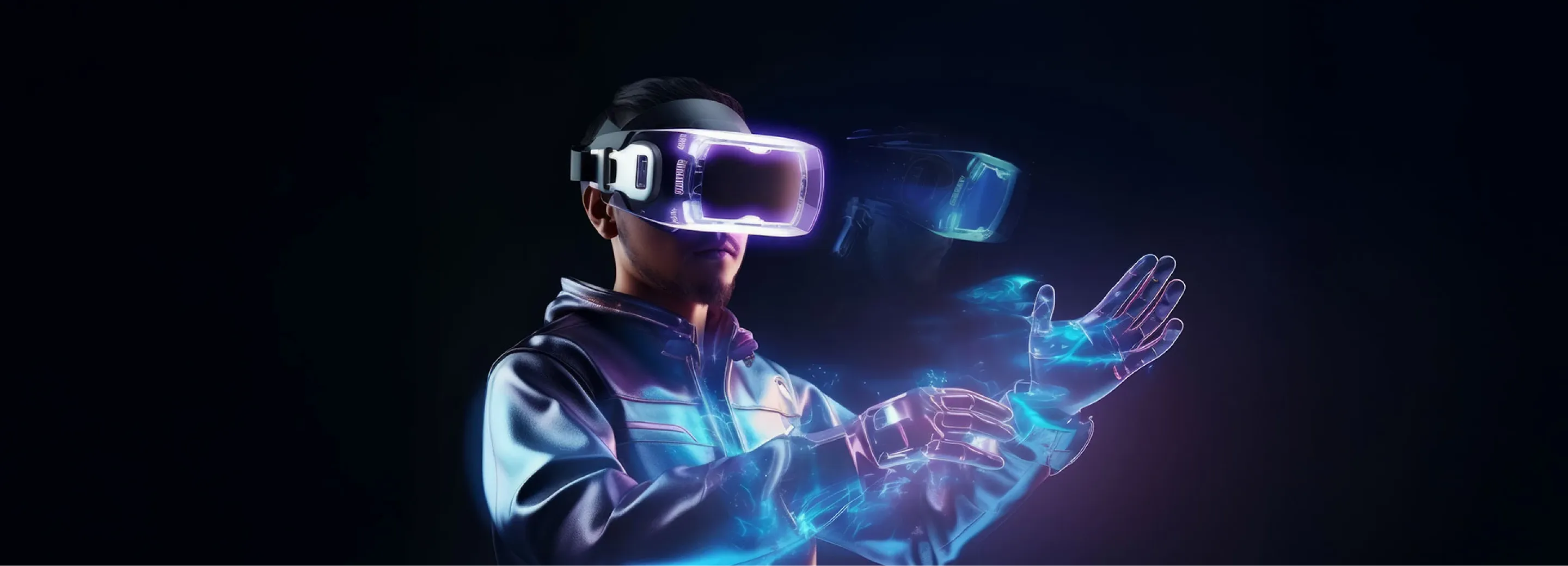
Virtual reality (VR) is no longer confined to the gaming world. Today, it is reshaping how we design and interact with digital experiences across industries. As businesses seek more engaging ways to connect with their users, VR in UI/UX design is fast becoming a critical tool. Instead of relying on flat screens and static interfaces, designers can now create fully immersive environments that place users inside the experience.
At Trinergy Digital, we work closely with brands to explore new frontiers of digital innovation. The rise of VR presents exciting opportunities for redefining user interfaces and experiences, enabling businesses to offer their audiences interactions that feel natural, intuitive, and memorable.
In this article, we will explore how VR is transforming UIUX design, why it matters for your digital strategy, and the principles you need to consider when creating immersive experiences.
Understanding VR in the Context of UI/UX Design
To appreciate the role of VR in UIUX design, it is important to understand what makes it different from traditional design approaches.
User Interface (UI) typically refers to the layout, controls, and visual elements users interact with. User Experience (UX) focuses on the overall journey, ensuring the experience is seamless and enjoyable. In VR, both concepts expand significantly because the “interface” is no longer just buttons or menus on a flat screen, it is the entire environment surrounding the user.
For example, in a VR shopping application, instead of scrolling through product thumbnails, a user might walk through a virtual showroom, pick up items, and inspect them as though they were physically present. This shift transforms the role of UIUX designers into that of “world-builders,” where spatial design, movement, and interaction matter just as much as colours and typography.
Why VR is Becoming Essential for Digital Experiences
Several factors are driving the integration of VR into UIUX design:
1. Increased Accessibility of VR Devices
Headsets like Meta Quest, HTC Vive, and PlayStation VR have made VR more mainstream. As costs fall, businesses are seeing opportunities to use VR beyond entertainment.
2. Growing Demand for Immersive Content
Audiences, especially younger generations, expect more interactive and personalised experiences. VR satisfies this demand by offering engagement that feels authentic and participatory.
3. Applications Across Industries
VR is already being used in healthcare for training, in retail for virtual shopping, and in real estate for property tours. Each of these applications requires thoughtful UIUX design to succeed.
4. Enhanced Emotional Engagement
VR has a unique ability to evoke emotions because it simulates real-world presence. This creates stronger connections between users and digital products.
5. Support from Big Tech
Companies like Apple, Meta, and Google are heavily investing in immersive technologies, accelerating innovation and setting standards that others will follow.
In short, VR is no longer optional for brands that want to stay competitive in delivering cutting-edge experiences.
The Shift from 2D to 3D Interfaces
Traditionally, UIUX design has relied on two-dimensional screens. Buttons, icons, and navigation menus are arranged within fixed boundaries. VR, however, breaks this limitation by moving into three-dimensional space.
This transition requires a complete rethink of design principles:
Spatial Awareness
Designers must consider how users move within an environment. For instance, a menu might appear when a user turns their head or gestures with their hand.Depth and Scale
Unlike flat designs, VR requires careful consideration of distance, size, and perspective. A virtual object too close may overwhelm the user, while one too far away may be overlooked.Multi-sensory Design
Sound, haptics, and even environmental cues such as lighting play vital roles in creating a realistic experience.Intuitive Interactions
Users interact with VR through natural gestures, voice commands, or controllers. Interfaces must feel intuitive, avoiding complex learning curves.
This paradigm shift mirrors the transition from desktop to mobile design a decade ago. Just as mobile-first design became the norm, immersive-first design will soon guide how digital products are built.
Principles of Designing for VR Experiences
Designing for VR requires principles that go beyond traditional UIUX. Some of the key considerations include:
1. Prioritise Comfort
VR can cause discomfort if poorly designed. Motion sickness, dizziness, and eye strain are common challenges. Designers must ensure movements are smooth, interactions are predictable, and environments avoid overwhelming stimuli.
2. Focus on User-Centred Design
In VR, personal space matters. Placing objects too close can feel intrusive. Interfaces should adapt to user preferences, allowing customisation where possible.
3. Create Clear Navigation
Without physical buttons, navigation must be intuitive. Visual cues, spatial anchors, and guided paths help users orient themselves.
4. Design for Accessibility
Not all users have the same physical abilities. Inclusive VR design means offering multiple input options, from voice control to simplified gestures.
5. Balance Realism with Functionality
While realism enhances immersion, too much detail can overwhelm users or slow down performance. The key is finding a balance that prioritises usability without sacrificing engagement.
Opportunities VR Brings to UI/UX Design
The introduction of VR into UIUX design opens doors to a range of possibilities:
1. Enhanced Storytelling
VR allows brands to immerse users in narratives. For example, a tourism company can take potential customers on a guided virtual tour of destinations, letting them experience the sights before booking.
2. Improved Training and Education
Training simulations in VR enable learners to practice skills in safe, controlled environments. From medical procedures to machinery operations, these experiences are only effective when designed with strong UX principles.
3. Virtual Retail and Commerce
VR shopping experiences can mimic in-store browsing, allowing users to try on clothes virtually or explore furniture in 3D. With thoughtful UIUX design, these interactions can feel as natural as real-world shopping.
4. Remote Collaboration
Teams can meet in virtual spaces, brainstorm ideas, and manipulate 3D models together. This offers a level of collaboration that video calls cannot match.
5. Accessibility for Complex Data
VR makes it easier to visualise complex data sets by turning them into 3D objects. For industries like finance or engineering, this can make analysis more intuitive and engaging.
Challenges in Adopting VR for UI/UX
Despite its promise, VR adoption in UIUX design faces several hurdles:
Hardware Limitations: Not all users own VR headsets, and devices still vary in quality and accessibility. Designers must account for different capabilities.
Learning Curve for Designers: Many UIUX professionals trained in 2D design need to develop new skills, including 3D modelling and spatial design.
Performance Issues: High-quality VR environments require significant processing power. Optimisation is key to maintaining smooth user experiences.
Standardisation: Unlike web or mobile design, VR lacks universal standards for interaction, making it harder to create consistent experiences.
User Acceptance: While younger audiences embrace VR, some users remain hesitant due to discomfort or unfamiliarity with the technology.
Understanding these challenges is the first step towards addressing them and creating designs that truly harness the potential of VR.
Case Studies and Examples of VR in Action
To see how VR is applied in practice, consider these examples:
Retail: IKEA has introduced VR apps that allow customers to explore kitchens and furniture in a simulated home environment. This lets shoppers test layouts before making a purchase.
Healthcare: Surgeons use VR training platforms to practise procedures without risk to patients. These platforms rely on realistic yet functional UIUX design to guide trainees.
Real Estate: Agents use VR tours to showcase properties to potential buyers worldwide. Instead of photos, buyers can walk through homes and experience spaces virtually.
Education: Universities are adopting VR classrooms, where students can interact with models, attend lectures, and collaborate in ways that traditional e-learning cannot match.
These case studies illustrate the importance of well-designed VR interfaces that make immersive experiences not only possible but effective.
Future Trends Shaping VR in UI/UX Design
As VR continues to evolve, several trends are likely to define its role in UIUX design over the next decade.
1. Mixed Reality Experiences
The boundary between VR and augmented reality (AR) is becoming blurred, especially with the rise of mixed reality headsets such as Apple Vision Pro. Designers will need to create interfaces that seamlessly integrate digital elements into the physical world. This hybrid approach will allow users to shift between immersive VR experiences and practical AR overlays without breaking continuity.
2. Personalised Immersive Environments
AI and machine learning will play a bigger role in tailoring VR environments to individual users. Imagine a shopping app that not only displays products but arranges them in a layout that reflects your previous preferences. Personalisation will make immersive experiences feel more relevant and engaging.
3. Haptic Feedback and Multi-Sensory Interfaces
Future VR interfaces will not just be visual and auditory. They will engage touch, and perhaps even smell and taste. Haptic gloves and suits are already being developed, allowing users to physically feel interactions within digital environments. This means UIUX designers will need to account for multi-sensory feedback as part of their design process.
4. Social VR and Virtual Communities
Just as social media transformed digital engagement, social VR platforms will become hubs for connection. Platforms like Horizon Worlds and VRChat already show the potential for shared immersive experiences. Designing intuitive, accessible interfaces for these environments will be crucial for adoption.
5. VR for Everyday Productivity
Beyond entertainment, VR is likely to become a tool for daily productivity. Virtual workspaces where users can interact with data, attend meetings, and collaborate on projects will demand interfaces that prioritise efficiency and comfort over spectacle.
Ethical Considerations in VR UI/UX Design
As with any transformative technology, VR brings ethical responsibilities for designers.
Privacy and Data Security
VR systems can track movements, gaze, and even biometric responses. Designers and businesses must ensure that user data is protected and used responsibly.Inclusivity
Immersive experiences must be designed to accommodate diverse users, including those with disabilities.Digital Wellbeing
Spending long periods in VR can impact mental and physical health. Designers should create features that encourage healthy usage patterns.Representation
Avatars and virtual environments should reflect cultural diversity and allow users to express themselves authentically.Sustainability
As VR adoption grows, so does the demand for energy-intensive hardware. Designers and developers must explore ways to optimise performance while reducing environmental impact.
Best Practices for Implementing VR in UI/UX Design
For businesses considering VR in their digital strategy, here are steps to get started effectively:
1. Identify Clear Use Cases
Not every product or service needs a VR component. Focus on areas where immersion enhances the user journey.
2. Prototype and Test Early
Start with small-scale prototypes. Test with real users to identify issues with navigation, comfort, and usability before committing to large-scale development.
3. Collaborate Across Disciplines
Successful VR projects often require input from designers, 3D modellers, developers, and subject matter experts.
4. Design with Scalability in Mind
Build experiences that can adapt to different devices and performance levels.
5. Stay Updated with Standards and Guidelines
As VR matures, emerging best practices and guidelines will shape consistent user experiences.
What This Means for Businesses
The integration of VR in UIUX design is not just a passing trend. It represents a shift in how users will expect to interact with digital products in the future. For businesses, the message is clear: those who invest in immersive design today will be better positioned to capture the attention and loyalty of tomorrow’s audiences.
Imagine offering your customers the ability to explore your services in a fully immersive environment, where engagement is not only visual but experiential. Whether you are in retail, education, real estate, or healthcare, VR has the potential to set your brand apart.
At Trinergy Digital, we help businesses explore and implement innovative technologies like VR to deliver digital experiences that resonate with their users. By combining creative design with robust development, we create solutions that are not only immersive but also practical and results-driven.
Looking Ahead to Immersive Digital Journeys
The future of VR in UIUX design holds vast potential for reshaping how we experience the digital world. From creating virtual showrooms to enabling remote collaboration, VR offers opportunities that go far beyond flat screens. While challenges remain, businesses that embrace immersive design early will not only stand out but also set new standards for user engagement.
As the line between physical and digital continues to blur, the question is no longer if VR will influence your digital strategy, but when. The brands that act now will define the immersive journeys of tomorrow.
Ready to explore how VR can elevate your digital experiences? Contact Trinergy Digital today to start building the future of your UIUX design.